Private health insurance for resident physicians: Is joining really worth it?


The decision between statutory health insurance (GKV) and private health insurance (PKV) is a key step for residents at the start of their careers. Understanding the differences between the two systems helps young doctors better assess whether switching to private health insurance is truly worth it.
Choosing between GKV and PKV
Starting a medical career brings new responsibilities, experiences, and important decisions. One of these is choosing your health insurance. Many young doctors are covered by statutory insurance during their studies. However, by the time they receive their first salary increase, the question arises: Private or statutory health insurance—which is the better fit?
There is often uncertainty, especially among residents. PKV offers better benefits, more customized plans, and potentially lower premiums. At the same time, critics warn of rising costs in retirement, issues with coverage, and the difficulty of returning to the GKV.
This article provides an overview of the requirements, opportunities, and risks to help young doctors make an informed decision.
Requirements: When can residents switch to PKV?
Switching to private health insurance is only possible if certain criteria are met. The most important criterion is the compulsory insurance threshold.
Annual earnings threshold
To switch from GKV to PKV, your income must exceed the annual earnings threshold (JAEG). In 2026, this is 77,400 euros gross. Since starting salaries for residency training are usually below this amount, most doctors remain in the statutory health insurance system at the beginning of their careers.
The impact of on-call duties
The assessment is always based on your actual, regular annual gross income, not just your base salary. Supplements for night shifts, weekend shifts, or on-call duty can cause you to reach the threshold sooner.
Role of the HR departmentg
If the annual earnings threshold (JAEG) has been exceeded for a full year, the HR department reports this to your statutory health insurance provider. In doing so, they take all regularly paid income into account, which for a doctor with regular shifts includes not only the base salary but also supplements and special payments. The statutory insurance provider then sends an information letter to the policyholder, informing them of the change in status from a mandatory insured member to a voluntary member.
Advantages of private health insurance for resident physicians
Deciding on private health insurance (PKV) is not just a matter of premiums. Especially during residency, it offers tangible advantages in both the short and long term.
Professional advantages
Insurers offer doctors special physician plansthat are more affordable and offer better coverage than standard plans. These are tailored to the residency period: low premiums with high levels of protection. Many insurers also allow you to switch plans without a new medical exam, for example, after completing your specialist training.
Insurers consider doctors to be attractive customers. They are generally health-conscious, have a stable income, and use expensive services less frequently. This leads to better terms and discounts.
Scope of coverage
Private health insurance offers customizable coverage. Typical components of high-quality physician plans include treatment by a chief physician or private doctor in the hospital, single-room accommodation, coverage for alternative medical treatments, extended dental benefits, and the freedom to choose your hospital. In addition, private patients often receive appointments faster and benefit from more intensive care.
Financial advantages
- Premium levels: Premiums are not based on income. Even if your salary increases, your private health insurance premium remains constant, provided there are no general plan adjustments.
- Employer contribution: As with statutory health insurance, the employer covers half of the premium up to the maximum contribution limit.
- Premium refund: Those who do not submit any claims often receive several months' worth of premiums back.
- Age-related reserves: A portion of the premium is saved for the future to cushion cost increases in old age.
Disadvantages and risks: When statutory health insurance may be the better choice
As attractive as the benefits may seem, there are also limitations that should be considered.
Premiums in retirement
The concern about rising private health insurance premiums in retirement is widespread. While costs do increase with age, age-related reserves help mitigate this trend. Furthermore, doctors in professional pension schemes do not have access to the health insurance for pensioners (KVdR). In many cases, private health insurance can actually be more affordable in old age.
Family insurance
In private health insurance, spouses and children are not automatically covered. A separate premium applies to each family member. However, employers also contribute to the costs for children. Additionally, there are special, low-cost plans for children. In practice, private health insurance is usually the more profitable option for a doctor with 2-3 children if the policy was taken out at a young age. If both parents are eligible for private health insurance, it remains an attractive option even for large families.
Returning to statutory health insurance
Switching back to statutory health insurance later is only possible under certain conditions, such as working part-time below the income threshold, unemployment, or moving abroad. From the age of 55, a switch is generally excluded. Those who will only be subject to mandatory statutory insurance for a short time can keep their options open by taking out a waiting period insurance (Anwartschaftsversicherung) to continue their private health insurance contract at a later date.
Health check
A health check is required before being accepted into private health insurance. Pre-existing conditions can lead to surcharges, exclusions, or rejection of the application. For young and healthy doctors, this is generally not an obstacle.
Solidarity principle
Statutory health insurance operates on the principle of solidarity: everyone pays in regardless of their individual risk. For some, this social aspect plays an important role.
Cost of private health insurance for resident physicians
The Costs of private health insurance for medical residents play a decisive role in the choice between public and private health insurance.
.png)
Source: Created with Napkin.ai
Example calculation
A medical resident pays approximately 760 euros per month for health and long-term care insurance in a high-quality physician plan.
With the employer contribution, the out-of-pocket cost is reduced to about 393 euros.
For comparison: The maximum contribution for public health insurance in 2026 is approximately 1,261 euros, with an out-of-pocket cost of 648 euros.
This can result in monthly pre-tax savings of over 250 euros.
Premium structure
The premium amount is based on your age at entry, health status, and the scope of coverage. Age-related reserves ensure that premiums remain stable during retirement.
Additional options such as deductibles or premium relief plans allow for further customization.
Dynamics: Premium trends in private (PKV) and statutory (GKV) health insurance
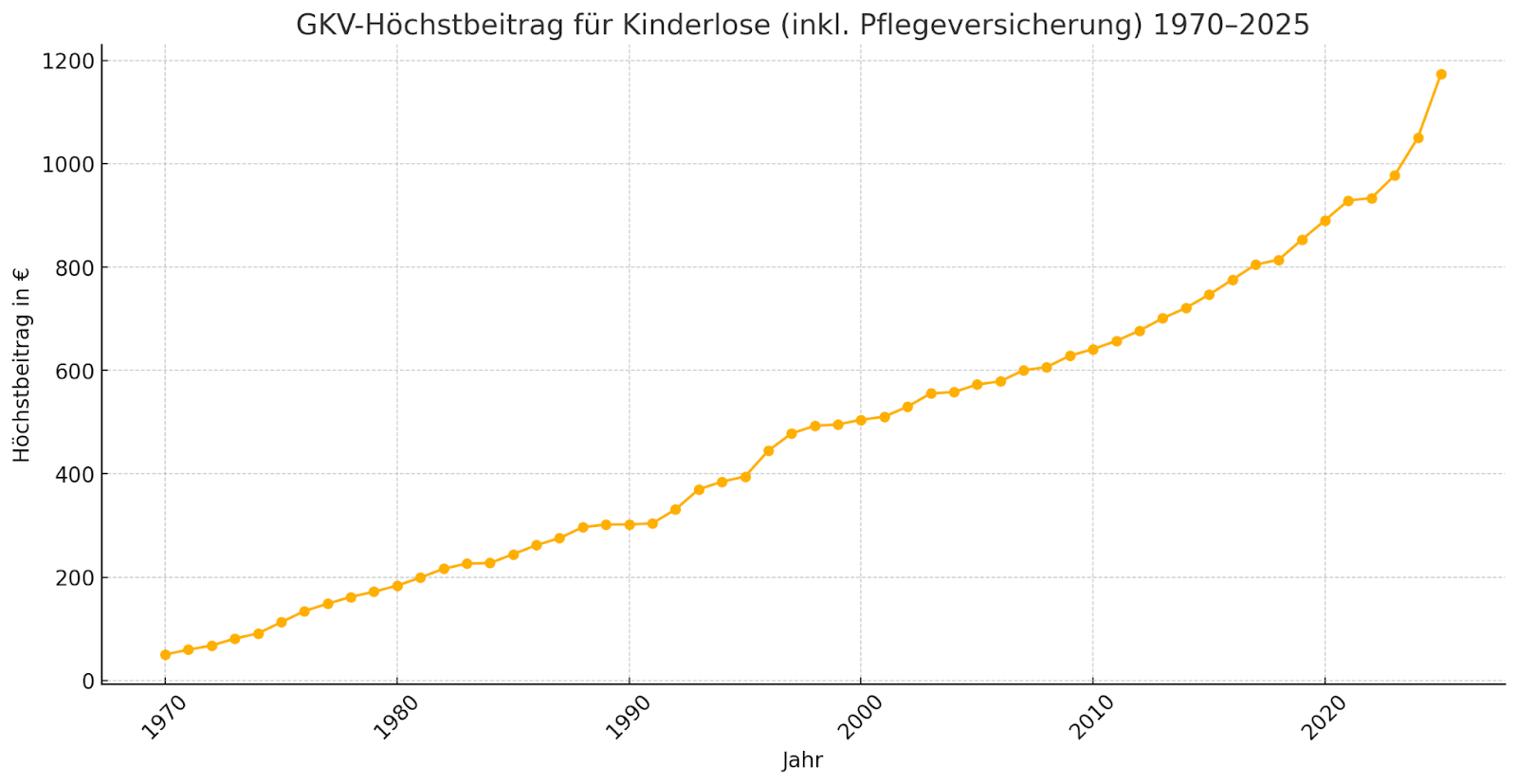
Source: Created with ChatGPT
Contributions in statutory health insurance (GKV) rise automatically with income. The salary threshold at which the maximum contribution had to be paid was €66,150 in annual gross income in 2025. In line with the social security system, higher earners bear the largest share of general contribution increases for healthcare costs.
The chart showing the development of maximum GKV contributions reveals the structural pressure: contributions have been rising continuously since 1970, with a projected increase to approximately 1,383 euros per month by 2027.
In private health insurance (PKV), however, contributions are independent of income. Premiums evolve in proportion to healthcare costs and the scope of coverage. Studies show that premium increases for most private health insurers are significantly lower than those in the statutory system.
Important for doctors: Pensioners from professional pension schemes are not eligible for the health insurance for pensioners program. Consequently, doctors with statutory insurance pay the full contribution rate for health and long-term care insurance (19.6%) on their pension and private income during retirement. With a good premium relief tariff, private health insurance is almost always the significantly more cost-effective option in the long term.
Additional options and deductibles
In private health insurance, you can actively influence your premium. For example, those who choose a deductible of, for instance, €500 or €1,000 per year pay a correspondingly lower monthly premiumAt the same time, many insurers offer attractive bonus programs and premium refunds for those who do not make claims.
In addition, premium reduction plans help to further cushion costs in retirement.
This flexibility provides a level of freedom that simply does not exist in the statutory health insurance system.
How Wealth Doctors supports physicians in their private health insurance decision
Choosing between statutory and private health insurance is one of the most far-reaching decisions you will make at the start of your career. It has financial and health-related implications that can shape your entire professional life and retirement.
In our consultations, we therefore take a very close look at your individual situation and examine one thing above all else:
Will private health insurance remain a sound decision in the long term, even under stress scenarios?
Because we specialize in working with physicians, we are familiar with the specific insurance plans and options that general advisors often overlook or that are not even available on the open market. The deciding factor is not the lowest initial premium, but the structure over the entire duration of the policy.
Specifically, our consultations always clarify:
- How can premiums remain affordable in retirement?
- What options can we keep open to return to statutory health insurance if needed, should your life circumstances change?
- How can private health insurance remain the right decision even if, later on, Children and family join in?
Conclusion: Private health insurance for assistant physicians is an individual decision
Private health insurance offers many clear advantages: better coverage, flexible plan options, and financial relief during the first years of your career. At the same time, the decision should be well thought out.
From our more than 1,000 consultations, we repeatedly notice the same three mistakes that determine whether switching to private health insurance will prove to be a good decision later on:
- Focusing only on costs. The lowest initial premium ignores long-term premium stability in retirement and risks coverage gaps.
- Ignoring future and stress scenarios. Family, job loss, sabbaticals, or part-time work must be taken into account from the very beginning.
- Answering health questions inaccurately. Missing or contradictory information can jeopardize the entire insurance plan later on
For physicians who consider these points, private health insurance can mean permanently lower premiums and better benefits. For others, however, the statutory health insurance might be the better choice. Ultimately, an individual assessment is key.
Get to know us personally
At Wealth Doctors, we understand how demanding your daily routine is. That's why we start by informing you about your options on the market, with no pressure at all, and help you make sense of your situation. If evenings work better for you, we'll find a slot even after a late shift.
If you like what you hear, we might work together, if not, that's okay too.